
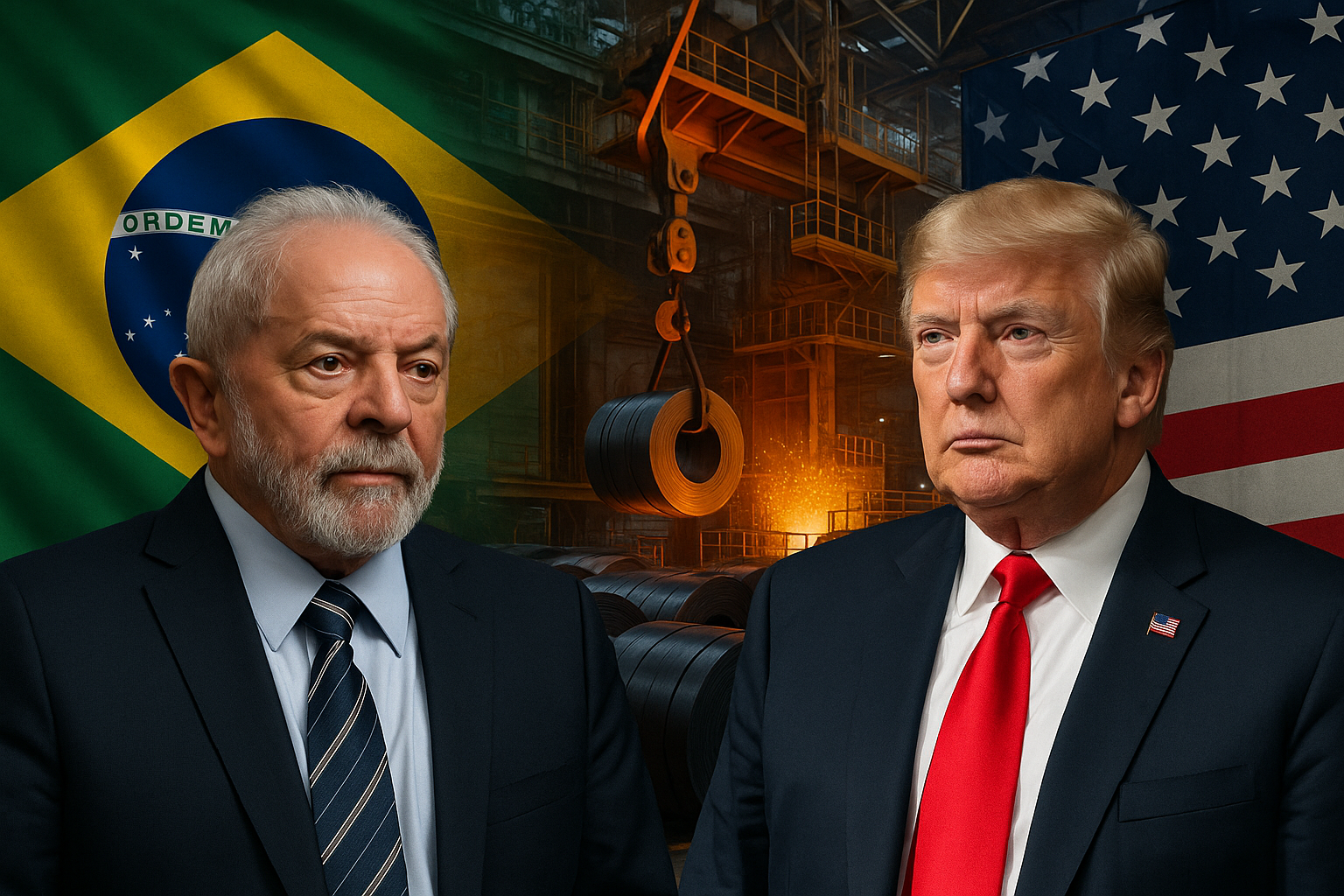
The diplomatic relationship between Brazil and the United States is experiencing heightened tension due to ideological differences between Presidents Lula and Trump.
This divergence has direct implications for the steel and manufacturing sectors, especially companies reliant on U.S. exports.
Steel, being a strategic and political commodity, is vulnerable to both explicit tariffs and non-tariff barriers.
Industries must prepare for geopolitical shocks and protect their operations and profitability.
This article explores how political ideology influences trade policy and outlines immediate strategies for Brazilian exporters.
1. Current Political Landscape: Brazil vs. United States
The reelection of Donald Trump, marked by nationalist rhetoric and ‘America First’ policies, contrasts sharply with President Lula’s left-leaning, socially progressive agenda.
Tensions emerged around climate commitments, labor rights, and bilateral trade policies, especially on sensitive sectors like steel, aluminum, and agribusiness.
Trump’s administration has historically used Section 232 to impose tariffs under national security justifications—Brazil may again become a target.
2. How Political Conflicts Affect the Steel and Manufacturing Sectors
Political divergences often lead to unilateral decisions such as tariffs, quotas, sanctions, or barriers under ESG compliance labels.
Brazilian steel exports to the U.S. reached $2.2 billion in 2024 but dropped 38% during the mid-2025 tariff enforcement.
Even after tariff removals, bureaucratic delays and increased inspections reduced competitiveness, leading to contract losses in the auto and construction sectors.
3. Types of Steel at Risk and Their Applications
Flat-rolled Carbon Steel: Used in car frames, trailers, and appliances; easily targeted due to volume and visibility.
Cold-formed Steel Sections: Applied in housing structures and machinery; trade-sensitive due to labor cost differentials.
AHSS (Advanced High-Strength Steels): Premium market products for safety-critical automotive applications.
Galvanized Coils: Vulnerable to anti-dumping claims; used in cladding, roofing, and white goods.
Seamless Pipes: Critical in energy sectors; prior sanctions used this segment as leverage.
4. Strategic Actions for Industries: A Practical Guide
- Political Risk Mapping: Maintain dashboards tracking U.S. policy updates, trade law changes, and lobbying signals.
- Reinforce ESG Traceability: Document carbon neutrality efforts, labor conditions, and source traceability using digital platforms.
- Strengthen Domestic Alliances: Work with industry groups (e.g., Instituto Aço Brasil, FIESP) for unified action.
- Diversify Export Ports and Channels: Utilize bonded warehouses in Mexico or Panama for flexible redirection.
- Dual Product Development: Maintain variants tailored for U.S. vs. alternative markets to bypass embargoes.
- Negotiate Long-Term MOUs: Secure fixed-term purchase agreements with U.S. clients to buffer against short-term policy shifts.
5. Sector-by-Sector Impact and Technical Examples
Auto Parts: Switching from carbon steel to AHSS reduced component mass by 22%, improving crash compliance and cutting logistics costs by 14%.
Metalworking: Upgrading to tool steel boosted output accuracy by 17%, enabling entry into EU and Asian markets.
Road Trailers: Adoption of Corten steel prolonged durability by 35%, with ROI in 13 months.
Civil Construction: Modular steel frameworks cut assembly time by 40% and labor accidents by 28%.
Agricultural Machinery: Use of microalloyed high-toughness steels extended part lifespan by 3.7 years, saving ~R$450,000 annually.
Furniture and Appliances: Pre-painted coils replaced aluminum, reducing weight and material costs by 18%.
Distributors: Logistics centers segmented into ‘NAFTA’ and ‘Non-NAFTA’ product flows for compliance.
6. International Market Alternatives: Risk and Opportunity Matrix
Germany: Favorable for auto steel, standardized certifications, and high-margin sectors.
South Korea: Seeks electronics-compatible steel; favorable exchange rate.
India: Growing infrastructure demand, but price sensitivity is high.
Mexico: Gateway to U.S. via USMCA, with aligned import rules.
UAE and Saudi Arabia: Large-scale structural steel projects (NEOM, Vision 2030).
Low Advantage Markets: China (oversupply), Russia (sanctions), Argentina (instability).
7. Advantages and Disadvantages of Immediate Strategic Action
Advantages:
- Reduces dependency on a single market.
- Enables access to ESG-friendly funding and partnerships.
- Improves brand positioning and pricing power.
Disadvantages:
- Certification and compliance costs may exceed 4% of revenue.
- New markets present cultural, legal, and logistical barriers.
- Loss of economies of scale from product diversification.
8. Political Awareness as an Industrial Imperative
Political instability and ideological differences directly influence trade routes, pricing, and regulations.
The Brazilian steel ecosystem must evolve from reactive to strategic.
Future-ready exporters will prioritize innovation, policy engagement, and international resilience alongside metallurgy and quality.
9. The Role of Global Supply Chains and U.S. Protectionism
The U.S. increasingly adopts protectionism through local content laws like the Inflation Reduction Act and CHIPS Act.
Brazil must anticipate protectionism via policy intelligence, legal advice, and adjustments to regional value chains.
Options include partnering with U.S.-based assemblers or relocating finishing to the U.S.-Mexico border.
10. Steel and the Energy Transition
Steel powers wind turbines, solar panels, and electric vehicle components.
Aligning exports with green narratives can shield Brazil from retaliation.
CSP’s hydrogen-based steel production aims to reduce emissions by 90%—a strong diplomatic lever.
11. Digital Diplomacy and Trade Analytics
Industries must act as diplomats using tools like tariff simulators and trade dashboards.
Digital strategies have led to 11% faster customs clearance and fewer penalties.
AI can track legislative sentiment, enabling early alignment and communication with buyers.
12. Strengthening Industrial Intelligence Networks
A consortium of exporters, embassies, chambers, and think tanks is essential.
Real-time lobbying and sanction alerts can help preempt threats.
In 2025, 70% of exporters lacked internal risk projections—a critical vulnerability.
13. Use of Trade Defense Instruments and WTO Tools
Brazilian firms must learn to use WTO instruments: anti-dumping, safeguards, and regional alliances.
Legal preparedness was crucial in mitigating 2018-2019 tariff impacts under Mercosur.
14. Promoting a Bilateral Industrial Agenda
Brazil should propose a U.S.-Brazil forum to align on climate, tech, and trade—mirroring the EU-U.S. Trade and Technology Council.
Joint leadership on green steel and data transparency can ease ideological rifts.
15. Realigning Brazil’s Global Branding Strategy
Rebrand Brazilian steel as resilient, green, and strategic.
Shift marketing from price to value: lifecycle, ESG, responsiveness.
Ethical branding drove Brazilian ethanol growth during U.S. fossil fuel pushback in 2020–21.
Final Reflection: Toward a Resilient Export Ecosystem
Navigating U.S. tensions demands engineering, flexibility, digital maturity, and global engagement.
Brazilian manufacturers must become strategic and resilient, using data, alliances, and ESG alignment to lead—not just survive—global market shifts.